Sneaky Motherhood, Writing

It’s here! I’m in print!

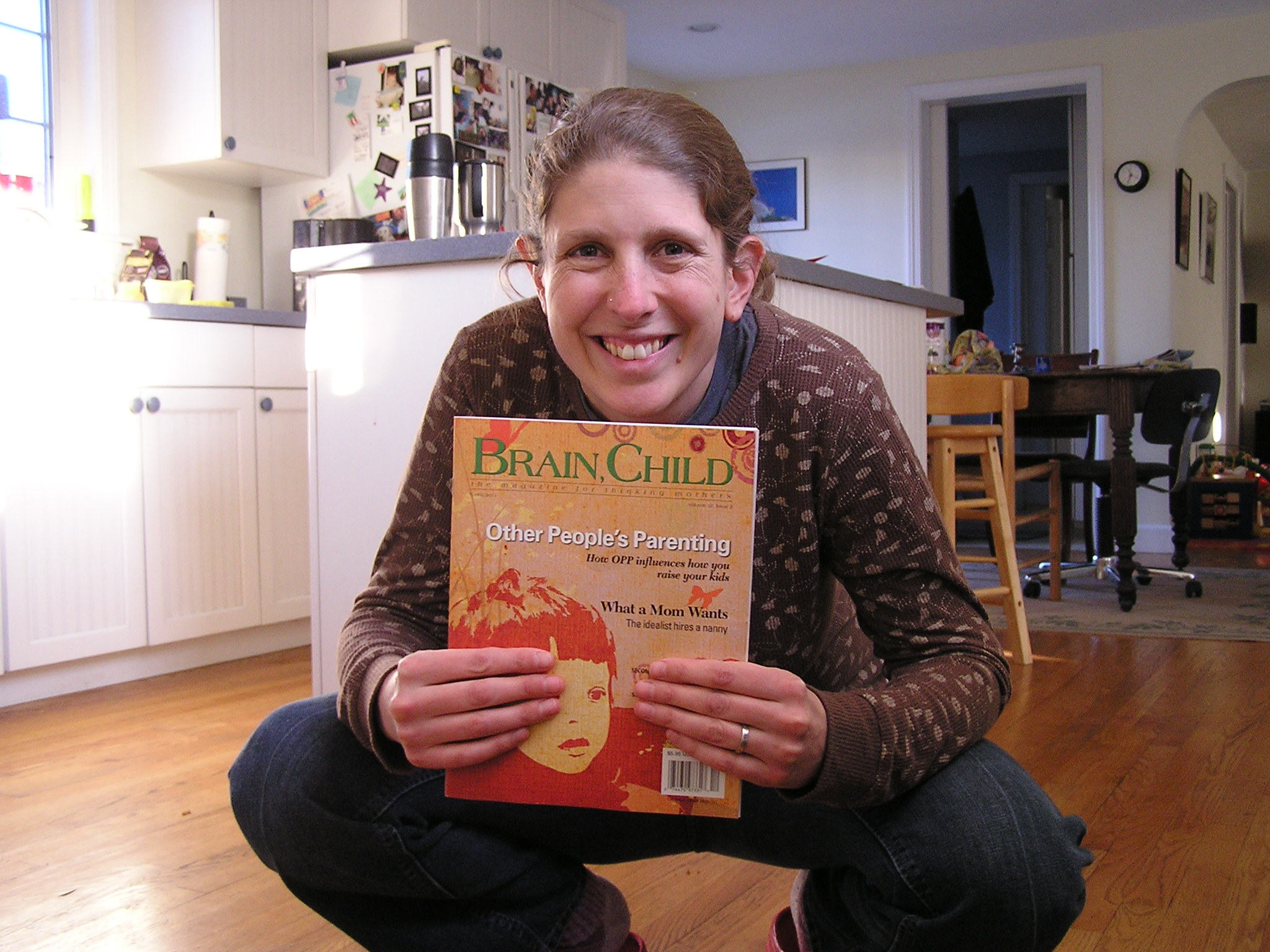
Hot off the presses; the spring issue of Brain, Child magazine can be found where ever better independent magazines on mothering are sold!!!

Turn to the last page, to the section called Motherwit to find my piece titled; The Interrogation.  Hooray!

An excited, but slightly sleep deprived, me with the Spring issue!


Here’s the page:


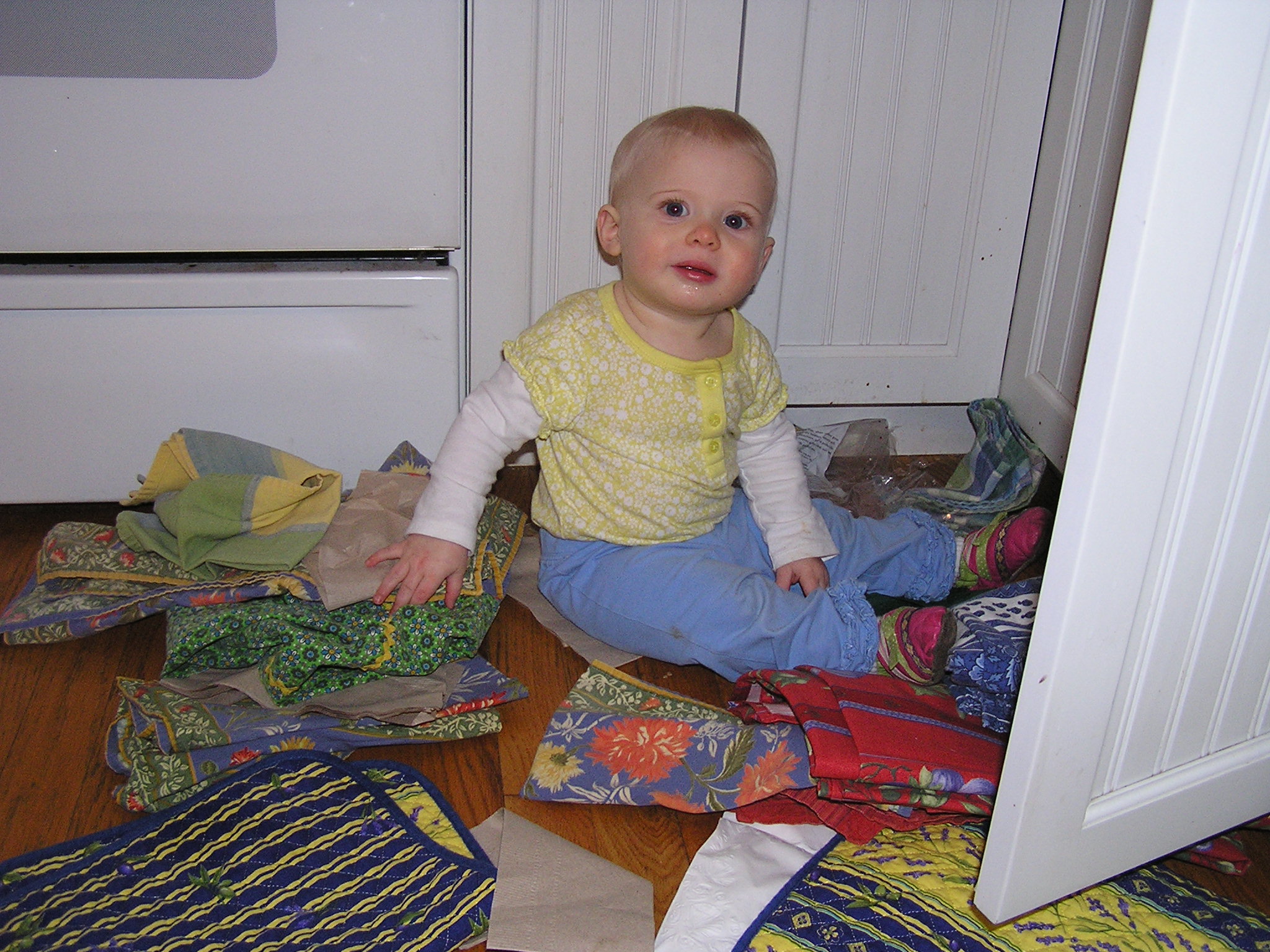
And, of course, my tiny muse.  Without whom none of this would be possible.

Busy with projects of her own!
Reading, Writing

Cardboard characters; worse in YA?

I’m pretty picky when it comes to reading fiction.  I don’t read trashy books for fun the way I watch trashy movies.  However when I read YA, I’m more open-minded.  Maybe because I write YA I want to get a broader sense of what’s out there.

I think it’s fair to say that in YA there’s more attention paid to plot than language.  YA readers are generally more interested in what’s happening than the way it’s happening.  But why all the 2 dimensional characters?  This is something that I do think kids are aware of.  When they’re presented with really well drawn complex characters they like them.  They say things like; “the book was very real” or “the characters were like real people” or “the characters were interesting”.  Young adults are highly attuned to authenticity.   Regardless of genre, regardless of how many trolls or elves or dueling balrogs you have in your story, you have to have Frodo or Harry Potter, Percy Jackson, Bella Swan, or Katniss Everdeen.  It’s not just the story, it’s their story, and you have to want to tag along with them for 200-600 pages.

For every great YA character there seem to be hundreds of “popular girl cliques” or “sad fat girls” or”football player heroes”.   Are stereotypical characters more prevalent in YA than adult fiction?  I’m not sure.

Favorite YA or other fictional character?

Sneaky Motherhood, Writing

Exciting news!

An essay I wrote was accepted for publication by Brain Child magazine! The piece is actually a short script; a parody of a desperate mother holding four renowned sleep doctors hostage until they tell her how to get her baby to sleep.  I suppose it would fall into the sub-genre of autobiographical fantasy.  For more detail, you’ll have to wait until the Spring 2011 issue of Brain Child!

Reading, Writing

The Holidays

I love holiday movies.  I can’t help it.  They’re shmaltzy and predictable but I just can’t help myself.  I like the funny ones, the dramatic ones, mainstream and independents.  Everything from a Christmas Story to David Sedaris Holidays on Ice. There’s just something about celebrating holidays that seems to encapsulate a certain amount of relational humor and drama.

My current work in progress takes place between Thanksgiving and New Year’s Eve.   The story kicks off with a particularly painful holiday in which the main character’s visiting cousin pees in his bed and his mother lies to him about the death of his beloved grandmother.

Do you have a favorite holiday moment; fictional or autobiographical?

Reading, Writing

When is sex allowed?

When is sex or even heavy petting (yeah, that’s right I’m bringing this phrase back) allowed in YA fiction?

  • When someone is dying or dies shortly afterward.
  • As a cautionary tale about teen pregnancy.
  • When it’s somehow non-consensual.
  • When it’s the biggest mistake of the character’s life.

Why do most teenagers have sex?

  • Because they’re curious.
  • Because they’re bored.
  • Or God forbid because it feels good!!!!

This side is somehow less “ok” to write about.  One of the refreshing things about a book I read recently called The DUFF was that it dealt with teens who were having sex and enjoying themselves without the world ending.  Now I don’t necessarily think all, or even most, teenagers are ready for sex.  But they are capable of having healthy relationships that are sexual in some way.  So why isn’t it written about?

Writing

Love you, hate your writing

It’s completely possible to love or really like a person and dislike their writing.  It’s challenging when it happens in writing groups, doesn’t matter so much when you read a great interview with an author and it turns out you can’t stand their novel.

But what about the reverse?  Can you find someone incredibly annoying or morally repugnant but still love their fiction?  My Mom couldn’t watch a Woody Allen movie after his relationship with his step-daughter went public.  She just couldn’t laugh at him any more.  Does a bad opinion of someone forever taint what they write?


School, Writing

Writing about writing

I’m trying to get back into blogging at least once a week.  I thought I would start off with some quotes and words of wisdom I keep posted in my classroom regarding writing.

I love to read and I love to teach reading.  I love to write but I don’t love teaching writing.  Why not?  I’m not sure.  Maybe a post for another time.

In the mean time, the first mini-poster I share with my writing students at the beginning of the year says; “I will not hate what I write.”  I got this from my Dad who has been working on a novel for over ten years.  He uses it as a mantra and a reminder to write and not judge.  I tell my students this early because I want to teach them to put away their inner critic while they’re brain-storming or drafting.  If they don’t, they’ll never get anything on paper.  “First drafts are supposed to suck,” I tell them.  (Yes, yes, I use the word suck to seem edgy and cool.  It doesn’t really work.)

Got a favorite quote or mantra about writing?

Reading, Writing

YA Pet Peeve

It really annoys me when YA authors confuse clothing with characterization.  For example, telling us the character wore an Abercrombie sweatshirt and Lucky jeans does not tell me what they are like.  I think this is more prevalent in YA fiction because adult authors assume that teens are hyper-conscious of their looks and pay attention to brands.  They do.  But that doesn’t mean that they need it (or want it) in their literature.  The exception would be a single piece of clothing that really does characterize someone and is linked to other character traits.

For example: Every day he wore the same black hooded sweatshirt with the frayed cuffs and the broken zipper.  The dark color hid the saliva marks where he nervously chewed his sweatshirt strings, hoping the teacher wouldn’t check their homework.

Reading, Writing

Human mud

Really liked this quote from an interview with author David Mitchell about writing and how his new book is more preoccupied with what he describes as “human mud” and less experimental in its structure and form.

“The reason we love the books we love – it’s the people.  It’s the human mud, the glue between us and them, the universal periodic table of the human condition.  It transcends.”

Read the whole article in last Sunday’s New York Times magazine.   I read his book Black Swan Green and I’m interested to check out Cloud Atlas.

Writing

Readers and Revision

Somehow I have managed to finish a first draft of my second YA novel tentatively titled Go West.  One mistake I think I made with my first YA novel was not letting other people read it early enough in the process.  I did most of my revision without getting outside input and I think I could have stream-lined my revision process by getting input earlier.  Who knows?

This time I’ve asked two English teacher friends to read the first draft and give me some really general feedback.  What works?  What doesn’t?  What are the most exciting parts of the story?  Where does it drag?  What do they want/need to know more about?

When do you first get feedback on your works in progress?  Who do you trust/burden with this task 🙂 ?