Reading

Great Expectations and/or/of The Goldfinch

Confession number 1: I came within 150 pages of finishing The Goldfinch and had to put it down.

Confession number 2: I’m purposely avoiding googling comparisons of Donna Tartt with Dickens because I’m sure there are much more astute ones out there.

Confession number 3: I do believe that better living is possible through enhanced biochemistry.

Back to number 1. I know I’m not the only one who got bogged down in The Goldfinch especially the long passages related to relentless drug and alcohol abuse. But that wasn’t why I ultimately had to set it aside. It’s very rare for me to read that much of a book and not finish. But the only time I really have to read is the evenings and I just couldn’t stomach the book before bed. It wasn’t so much the drug and alcohol abuse as the world of pain occupied by the main character and his inability to deal with that pain in any other way.  It just got so bleak. So hopeless.

Then I started thinking about Dickens -whom I’ve always loved. So many of his novels are epic in length and rather bleak in outlook. But there is always hope (and incidentally far less xanax). Even at the end of a Tale of Two Cities when Sidney Carton is about to sacrifice his life for the happiness of the woman he unrequitedly loves, he goes to his death believing it is a “far better thing” he is doing then what he had ever done. In Dickens there is always someone willing to share their last crust of bread even if it’s moldy. Not so with Tartt. What is shared in her novels is pain, the experience of it and the brief chemically induced escape from it. Again and again, in her other novels too, this stands in for friendship and even for love.

I bet Donna Tartt is a Dickens reader and admirer. How could she not be when so many of her characters share his characters’ pedigree. Theo -the orphan, Hobie is like a Miss Havisham and of course Pippa (a Dickensian name if ever there was one) is his Estella. Even Boris, arguably the most life-embracing, entertaining character of the novel has something of an artful dodger in him.  All the ways that Tartt plays with class in this novel are themes right out of the pages of any great Dickens novel.

So what? Is Tartt a great writer and a great story-teller? Undoubtedly. I suppose I wish she could take one more page from Dickens and find the hope in her stories. I made it through The Secret History and The Little Friend but ultimately The Goldfinch lost me or rather I lost hope in it.

Reading

Perfectly Good Reasons to be Open and Honest About Sex

PFGWB

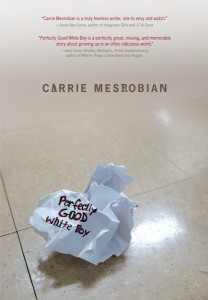
My fellow lab rat Carrie Mesrobian has a new book out this week. Her awesome debut Sex & Violence came out last fall and this year’s Perfectly Good White Boy is a fabulous successor, though not a sequel.

Carrie’s writing about teen sexuality is frank, open, honest and in my book quite refreshing. Here’s the little spiel from goodreads:

Sean Norwhalt can read between the lines.

“You never know where we’ll end up. There’s so much possibility in life, you know?” Hallie said.

He knows she just dumped him. He was a perfectly good summer boyfriend, but now she’s off to college, and he’s still got another year to go. Her pep talk about futures and “possibilities” isn’t exactly comforting. Sean’s pretty sure he’s seen his future and its “possibilities” and they all look disposable.

Like the crappy rental his family moved into when his dad left.

Like all the unwanted filthy old clothes he stuffs into the rag baler at his thrift store job.

Like everything good he’s ever known.

The only hopeful possibilities in Sean’s life are the Marine Corps, where no one expected he’d go, and Neecie Albertson, whom he never expected to care about.

“We’re something else. Some other thing. I don’t know what you’d call it. Maybe there’s a word, though. Maybe I’ll think of it tomorrow, when it won’t matter,” Neecie said.

What I loved about this book was the way the character navigated the worlds of sex and relationships -the ways they used each other and even allowed themselves to be used. Mesrobian explores these ideas with a thoughtfulness and nuance usually reserved for “so-called” adult fiction. Perfectly Good White Boy is a book about adolescents as much as it is written with them in mind. I can hardly imagine a more eye-opening and thought-provoking book for teens.

About the sex stuff: Mesrobian’s style sets her apart from other YA authors who may glitz or glamour over the messy, awkward, bodily fluids parts of things. I wanted to ask her about that part of her writing in an interview I jokingly titled the Squishy Bits. Here’s what she had to say.

You have a very frank, honest style when writing about “the squishy bits”. How did this develop for you? Particular influences? Hippie parents? Lots of National Geographic? 

I grew with parents who didn’t talk about sex very much Neither were they very affectionate people. They did explain How Babies Were Made but it was all with a great deal of discomfort and seriousness that made me never want to discuss it ever again with them. It was sort of hard to believe that they had sex themselves, given the way they acted toward each other, actually. It almost made me think there was something fiendish about them, or about all grown-ups. Some secret identity they all had. Something depraved. Something completely at odds with their normal behavior.
Actually, my father never discussed sex with me. Ever. It was only my mother who did. I never ever saw my father naked growing up. It was all a mystery, male nudity and female desire and sex itself being this Thing that everyone giggled about but adults didn’t think was funny at all. My parents are progressive people about politics and what not, but they are personally extremely conservative in their own behavior and what topics they consider appropriate.
So I guess my honesty regarding sex is a reaction to that. To people withholding information. To people not wanting to talk about this thing that clearly EVERYONE wanted to talk about. My mother was quite insistent that my sister and I remain virgins until marriage. “Sex is for married people” was one of the first lies from my parents that I uncovered. And it was pretty much the beginning of the wall coming down in terms of Who Was Right. Because sex for only adults? That was so untrue! It was so GOOD. It was so FASCINATING. Once you uncover a lie that adults tell you during adolescence, it’s as if everything else is also worthy of questioning. At least that was the case for me.
In terms of influences, well, the same mother who spoke infrequently and uncomfortably about sex? She also took me to the library on a weekly basis. She loaded up on books and let me wander and do the same. She didn’t seem to care what I read, either. So I read a lot of romance and a lot of adult fiction that probably was way over my head, but she never said a thing. I don’t know if that was disinterest on her part or just hoping that these books would fill in the cracks or what. Either way, it gave me a special interest in how people describe sex or romance in general.
Wow, very interesting. As I mentioned before I grew up in a household on the total opposite end of the spectrum -everything discussed, nothing particularly taboo. I mean we went to nude beaches on summer vacation. You get the idea? But here we ended up in sort of a similar place in that regard. Curious, very curious.
Do you recall any particular books you read as a teenager that you were like “whoa” that! “That’s what I want to know more about?” Any books which were particularly sexually educating?
I read a lot of genre fiction as a teenager. Tons of Stephen King. I re-read his short story collections over and over. The thing I love about Stephen King is probably everything. His books also contain some sex but not in a breathy, goopy way. More in a way that says, “yes, we all fuck/want to fuck, here it is, relax.” Stephen King, to me as a teenager, was an adult I could trust to be honest with me.

I read Judith Krantz and John Jakes and Sidney Sheldon and Lawrence Sanders (the deadly sins novels!) and Jacqueline Susann’s Valley of the Dolls. Like, if they made some sleazy TV movie of it, I read it. My mother has a pretty steep true-crime bent so things like that flew through our house without much incident.
Those books featured sex but mostly in a scandalous, gritty way. I don’t remember being particularly caught by any of the details. It was more the whole experience – there’s sex in here! woo! – that made those books memorable.

I also did a lot of reading that was all about me being snobby and hoity-toity about how smart I was. So I blew through Thomas Hardy, for example, even though I doubt I absorbed a 10th of what was going on there. I cannot recall one single assigned book in my entire high school career that I enjoyed, however. I suffered through most of that crap. Even when we read A Separate Peace in class – which I’d already read – the class discussion of that book managed to kill everything I loved about it.
I did discover Anne Tyler in high school and I loved her books so much. I loved how nothing seems to “happen” in her books. Yet everything happens at the same time. Small still moments. The kind of thing that puts my husband to sleep, to be honest.
Another relevant thing is that I re-read The Catcher in the Rye like a billion times. That book NEVER gets old to me. I can remember passages of it, exact phrases, even now.
Oh my goodness, Stephen King -totally! It’s funny but when people ask me what YA I read as a teenager I always scratch my head a bit because there was just so much less that was considered YA then. So you just kind of graduated to highly digestible adult stuff like Stephen King. 

I’d love to know your opinion about age designations in YA? Personally I wear several hats in this regard as an author, 8th grade teacher and parent (even though my own kid is still in picture books). I struggle with it the most as an 8th grade teacher where a lot of kids are really ready to be reading heavier stuff and a lot are still really happy with more MG stuff. 
So there’s a general question in there but more specifically do you think your books should be read by middle schoolers? High schoolers and up? Whomever is game?
I’m guessing most middle school librarians aren’t going to buy Sex & Violence. Or Perfectly Good White Boy, for that matter, even though the title isn’t as blunt.

(Incidentally, I’ve done a grand total of ONE school visit. ONE. Thank you, South High of Minneapolis! So, it goes with blunt, in-your-face titles.)
That said, I think there is no need to pull books away from kids. Certainly, librarians specialize in pushing books toward readers they think might enjoy or need them. But I feel like a kid’s readiness for certain content is something that’s already inside him or her. If you don’t have an interest in sexual or romantic relationships, you’re probably going to be bored by Sex & Violence and put it down.
If you have an interest in that, however, you might keep reading. Reading is a very low-risk way of engaging with high-risk behaviors. A very safe way of exploring risk, if you will. So I don’t know why people get so insane about books being banned or being “inappropriate” or whatever. There is also the claim that “kids don’t read these days!” Well, you can’t have it both ways. You can’t act as if books are unfairly influencing young people while maintaining they don’t actually read them.
Also, having an interest isn’t the same as behaving a certain way, though. A lot of times kids like to read about kids or concepts that are just a little bit above them. Like, their minds are maturing, but their bodies aren’t. And that growth among middle schoolers is wildly uneven, as I’m sure you know.
There are also kids that live lives that are not P-13, and this is not through any choice of their own, either. So those kids need librarians and teachers who can offer up the kind of content that might mirror their own experiences. Again – it depends on the experiences of the reader.
My kid, who is 11, has asked me: “When will you let me read Sex & Violence, Mom?” And I tell her, “Read it right now, if you want.” But she has yet to pick it up. And this is a kid who I’ve been talking to about sex since she was 5 years old and asked me what a condom was.
So when it comes to your middle school students, probably the kids who want a little something more, might not be getting all they want in the school library, and a youth librarian in a public library might be the one to advise.
This is assuming a school HAS a library, anymore. That’s a trend going on in my own district – getting rid of librarians and paper books altogether. Another topic!
As a fellow writer of YA who writes from the opposite gender POV I know I’ve been asked versions of this question before but as it pertains specifically to writing about sex, do you find that more difficult than say writing about eating a sandwich? More difficult? Or challenging? Or interesting? 
I guess it’s not that different than imagining anything else, really. I mean, it’s not like I have to do pull-ups and drink Red Bull before hand. If you can imagine being a boy wizard or what dragons are like or life on other planets or whatever, chances are good that you can imagine being a boy having sex for the first time.

However, these are scenes that require male beta readers. No question. I don’t have a good handle on the specific equipment – like how long can you have an erection? How quick can a penis get hard? What does it feel like to put on and take off a condom? – so I did have to ask the husband some of those questions.
Mostly I thought about my side of things when it came to first sexual experiences: what I was looking at or not looking at, what I was worried about, what freaked me out or surprised me in a good way. It’s nice to be on the other side of that inexperience, too; it’s good to be an adult who has seen the panorama view of sex and can compare what I thought it was about to what I think it’s about now.
The act of first sex can be very symbolic for some kids. It’s not really about sex, per se; it’s more a referendum on their beauty or their competence. Their value, their capability, their “coolness” even – how do I handle this situation for which I have no previous experience? It might not have much to do with feeling good or understanding actual anatomy or even their emotional response.
One technical issue in writing about first sex from a young man’s POV involves how long your prose can expand the event in a way that’s antithetical to the actual real time event. It might be possible to be meditative and reflective and descriptive during some sexual activities, but I’m guessing there’s not a ton of brain space available for most young men when they are about to orgasm. So that’s a difference I had to attend to. When I was a girl, it wasn’t like I was that physically distracted by first sexual activities to the point where my brain stopped working. Unfortunately for me, I guess. But fortunate in other ways: I was able to take note of a whole of lot of details.
This is sort of a two-parter.

1. What parts of Perfectly Good White Boy do you think would have interested you most as a teen?
2. Who do you imagine as the “ideal” reader for this book? Who do you envision as your ideal reader?
1. The sex parts, definitely. Though I KNOW I would have been fascinated to be inside a guy’s mind at that age. To me, nothing was more opaque than a boy’s thoughts and feelings. I wasn’t actually sure ANYTHING was going on in their heads. To be fair, I tended to like silent boys who rarely spoke. But also, they just seemed so imperious. And cool. I had no idea that they were sitting there with their post-lunch boners in math class, twitching internally.

2. You know, if I had to pick, I’d pick a kid who doesn’t like to read, for one. And I’d pick a kid that isn’t that interested in college or academic life. I think we need more books for such kids. About such kids – kids who aren’t college-bound, kids who aren’t going to grow up to be writers or academics. Maybe that’s a crazy wish for a market – I want to write books about non-readers, for non-readers – but I think kids who are readers have plenty of opportunities to see themselves in books. Another way of looking at the #WeNeedDiverseBooks movement could be this – we need books that aren’t just for the smarty-pants over-achievers. We need books for everyone, if we truly believe reading is an activity that all people can and should enjoy.
Okay, lastly, what books would you like to read/see in YA that aren’t out there yet or are under-represented? What topics do you think could be addressed more/better? It doesn’t have to be anything you would want to write yourself necessarily, but you know your hopes and dreams and all that good stuff.
I would like to see more characters that aren’t themselves readers. That would be an interesting challenge for in author voice.

I would like to see more girls enjoy sex that’s not about LOVE. Right now I’m working on a book with a girl, for the first time, and I’m hoping she’ll turn out to be a girl who gives a blow job and LIKES it, instead of being victimized or duped or manipulated by it.
I would like to see gay kids in stories that aren’t solely about them coming out or being bullied. I would like kids of color in stories that aren’t solely about racism or life in “urban” settings. And I want them to be the main characters, not best friends.
I love YA stories that include first jobs. I’d love to see more stories where the world of work as not just another quirky benign setting for the protagonist to pass through but as it is for many young people: a perilous, highly-fraught place where they meet and possibly bond with adults who they’re not related to, as well as learn about “adulthood” in a more hands-on way.
And, on a purely silly note, I’d like to see more Halloween activities, including trick-or-treating, depicted in YA. Halloween’s one of my favorite holidays and there are ALWAYS kids that are certainly teenagers who come to my door in half-assed costumes, asking for candy. I want to know their story!
Thanks Carrie for your candor and general fabulousness. You should all hustle out there and read Perfectly Good White Boy. You inner or outer teen will not be disappointed.
Order online
????Carrie Mesrobian is an instructor at the Loft Literary Center in Minneapolis. Her debut novel, Sex & Violence, was called one of the best books of 2013 by Kirkus Reviews andPublishers Weekly and was a finalist for the American Library Association’s William C. Morris Award for best debut young adult novel. A native Minnesotan, she lives with her husband, daughter, and dog.


Uncategorized

2nd Book Deal!

So, I’ve mostly been in bed or on the couch for the last two days -floored by the general discomfort of being 8 months pregnant and a nasty sinus head cold.  It’s a really gross combo which needs no more detail here. In the mean time I’m thrilled to get all official with my Publisher’s Weekly report about selling my latest YA novel to Andrew Karre at Carolrhoda Lab. This is the same amazing crew I worked with on The Other Way Around and I couldn’t be more excited that this book, currently titled Wireman, has found the same home.

Here’s the official excerpt and link to the PW page:

Andrew Karre also bought a second YA novel by 2014 debut author Sashi Kaufman (The Other Way Around). Kaufman’s second book, currently called Wireman, focuses on the complicated and longstanding friendship between two teenage boys, one of whom is hearing-impaired. Publication is scheduled for 2016; Lauren MacLeod from the Strothman Agency brokered the deal for world English rights.

But if you are here and reading my news in person I’d love to tell you a little more about this story. Yes, it focuses on the friendship between two teenage boys in their senior year of high school. It’s about the complicated nature of friendship between two young men. It’s about loyalty to each other and to a shared past. It’s about self-worth in friendship and deconstructing the idea of normalcy.  Whew, it’s also about soccer, and girls, steak and cheese and the importance of the LOTR movies.

A huge hug and thanks has to go to my awesome agent Lauren MacLeod who gets credit for planting the seed in my head a few years ago when she said. “I’d love to see a novel about male friendship and I think you could really knock it out of the park!” I just do what Lauren says 🙂

Also my agency sibs, Jodi Meadows, Robert Lettrick, Valerie Cole, Helene Boudreau who all jumped on social media to congratulate me before I could even pull my head out of the tissue box to notice. I really appreciate the camaraderie.  Okay, this Oscar speech is getting a little heavy handed -you get the idea. Can’t wait to share more!

Uncategorized, Writing

Boston Teen Author Fest!

Author panelBTAF2BTAF 1

I’m really excited for the Boston Teen Author Fest, which takes place at the Cambridge Public Library in just a couple short weeks on Saturday September 27th from 11-4! (These are photos from last year’s event)

If you’re a Boston person, I’d love to see you. Better yet, if you’re a Boston middle or high school teacher, you should tell your students to come. And of course any and all YA lovers are always welcome.

Besides yours truly, there’s the amazing opportunity to hear from authors like M.T. Andersen, Francisco Stork and A.C. Gaughen! Click here for a full list of who’s attending.


Reading, Writing

10 YA Books Which Won’t Let You Down

I’ve been a bit busy lately. Blah -dee, blah, nothing worth blogging about or I would be blogging. It’s been a good kind of busy the kind where you’re certain you’re learning something even if it will take months of processing to figure out what it is. In the mean time I feel very lucky to have the friends and family I have. I may have mentioned it before but it’s been incredible how many people have reached out to tell me, in one way or another, how much they enjoyed The Other Way Around. It’s really the best part.

So here’s a little gift back. This is not meant to be a comprehensive must read of YA fiction. It’s totally skewed to my tastes (mostly contemporary, a wee bit of light fantasy and sci-fi). These are ten YA books I think have real punch and literary merit and are amazing page-turning reads to boot. I hope you’ll enjoy. I did.

Short silly blurbs are my own. Links are to Amazon/Goodreads, but you should buy them at your local Indie if you can -or check them out at the library!


Scorpio RacesScorpio Races – (Maggie Stiefvater) mythical carnivorous horses, a race to save one’s life, a slow simmering love story.

WingerWinger – (Andrew Smith) Rugby, prep school, puberty, and love for the unreachable girl.

Everybody Sees the Ants – (A.S. King) heart-breaking bullying laced with magical realism. This book made me want to be a better grown up person. nuff said.
Eleanor and Park (Rainbow Rowell) -Incredible misfit love story.
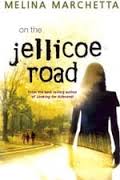
JellicoeOn The Jellicoe Road (Melina Marchetta)- A boarding school at war with itself, a parent’s myeterious death, a girl left to sort out the pieces.
Will Grayson Will Grayson – (John Green and David Levithan) One is gay, one is not. The intersection of their lives is incredible entertainment.
The Disreputable History of Frankie Landau Banks  (E. Lockhart) More prep school pranking madness.
In DarknessIn Darkness – (Nick Lake) Set in both present day and colonial Haiti, a boy trapped in the earthquake rubble imagines he is Touissant Louverture.
Feed – (MT Anderson)Best first line of a book ever. “We went to the moon to have fun, but the moon turned out to completely suck.” Frighteningly prescient science fiction.
Story of a Girl – (Sara Zarr) The fall out, with friends and family, from one girl’s first sexual experience.

I’ve been thinking a lot lately about what makes YA, YA and not just an adult book with a teenage protagonist or narrator. It’s fodder for a future post but I think it has something to do with layers and density (uh oh science teacher overlap here). I hesitate to use the word complexity because each of these books is beautifully complex and yet still definitively YA. More on that later. In the mean time, start reading! Or add your own “must read” in the comments.

Random musings, Writing

The Best Things

CakeI love my birthday. And even on a more “low key” year (2 or 3 small celebratory events) I still rejoice in it.

Highlights from this year’s event include:

  • The most fabulous dark chocolate cake dessert courtesy of Fore St and David Lacy.
  • Cheese plate.
  • Hiking a modest mountain in my 6th month of pregnancy.*
  • Beautiful flowers from friends.
  • Warm windy beach days.

Ah, the sigh of contentment. In honor of my birthday I’m running a giveaway right now on goodreads where you could win one of 3 signed copies of my book. Because it’s really fun to give presents too. Which brings me to another “best thing”. On goodreads it’s possible to see how many people are currently “reading” your book in their status update. I can’t even tell you how this makes me feel. I don’t even know these people -mostly. And somewhere out there they have picked up my book and are reading it. THAT is the most incredible gift. It’s like I’ve sneaked into their house and I’m telling them one of my favorite stories. It is a treat and a privilege; one that I don’t take for granted.

*Apologies if this is how you are finding out we’re having a second kid 🙂 I’m not much for blasting these things on social media…so SURPRISE!!!

Random musings, Reading

YA Movie Wish List

I love going to the movies. In my life pre-kid, Hubs and I went to a lot of movies. And YA makes for some good movies. Because YA tends to be plot focused, and moves more quickly then some “so-called” adult fiction I think it translates well to the cinematic form. The worst thing about the recent TFIOS (The Fault In Our Stars) movie, in my humble opinion, were the annoying teenagers who filled the movie theater. Oops, silly me, a teen movie is really marketed at teens. However, I did not think that this book or movie were really just for teens. Too bad they didn’t have a special showing for middle school and high school teachers, YA authors and other freak half-adult half adolescent creatures. Oh well. I was that lady shushing the kids behind me repeatedly. I did not threaten to get the management, but I would have.

But the movie got me thinking about other YA books that I think would make fantabulous movies. And I came up with the following list and potential pitch lines. Hollywood are you listening?

Scorpio Races

1. The Scorpio Races -young people with nothing to lose race mythic beasts to the death every November. (Maggie Stiefvater)

Feed

2. Feed – In a futuristic world dominated by implanted media chips 2 kids dare to defy the system and fall in love. (MT Andersen)


Jellicoe3. On the Jellicoe Road – At a boarding school in the Australian wilds every year an organized war breaks out between cliques. But will winning the war solve the mystery of a girl’s missing family? (Melina Marchetta)

Are you tempted? What YA novels would you like to see in cinematic form?

Writing

My Writing Process -Blog Tour

I got tagged by the awesome Megan Frazer Blakemore and Maria Padian -fellow Maine authors -as part of a blog tour on your writing process. You can click their names to see their responses to the following four questions about writing process.

Here are my answers!

1) What am I working on?

I have just finished a first draft of YA novel about two boys in their senior year of high school, their friendship and the role it plays in their lives when dark secrets from the past come to the surface. It’s really a book about loyalty and self-worth and how those things affect the relationships that are most important to us.


2) How does my work differ from others of its genre?

Well, I think that the YA I write is primarily for high-schoolers but that doesn’t necessarily differentiate it from other contemporary realistic YA. I think what sets my writing apart is the degree of frankness and emotional honesty with which I write my characters. I hope it does, anyway. Also, I like to write about bodily effluence perhaps a shade more than the average author.


3) Why do I write what I do?

Ah, this old question. I write because I like to tell myself stories. I write because I would be doing it anyway in my mind and writing it down makes me feel productive and purposeful. Also, I really enjoy making other people laugh and feel things. I write these specific stories because these are the stories I enjoy telling myself. Sometimes I come up with a really cool story idea but then it quickly becomes apparent it’s not a story I can tell -I want someone to tell it to me. That’s when I go to the bookstore and see if anyone has.


4) How does your writing process work?

My mother asked me a similar question at my book release party and I said something about prescription drugs. My writing philosophy and process is all about the phrase “small chunks” -which is somewhat unfortunate because it contains the word “chunks” in it, but it’s the most accurate verbiage I can come up with. (Small bits sounds like a genital reference.)

In all seriousness, my goal when I sit down to write is always to write 2 pages, 2 pages of dialogue, exposition, word count doesn’t matter to me but that 2 page amount is my arbitrary marker. I always read over my 2 pages from the previous day and I try not to go more than a few days without writing. Sometimes that’s possible, and sometimes that’s not. As a full time teacher, and a human with friends and a family I enjoy seeing, it all has to stay in something closely resembling balance.

I usually have a separate document where I have a table set up with a general outline and scene-by-scene sense of where I’m going. That’s usually only used when I’m writing the first half. That last third of a book is the part I struggle with the most. I’ve set up most of the conflict and now it’s time to hit those climactic moments and unravel things in a way that’s neither too rushed nor too drawn out. It’s the hardest part for me and the time when I experience the most feelings of “what if this all sucks?”

Once I complete a first draft I reread and try and identify the obvious major revisions needed before sending it to my first readers. If I went on about my revision process I’d be here all night so I think I’ll save that for another post/day.


Thanks for reading and for more posts on the writer’s process check out fellow agency sister Valerie Cole’s post or my fellow OneFour Maria Andreu -her book The Secret Side of Empty debuted this spring as well.

Writing

Like no one is watching

Warning -some cheesy content, and evidence of my hippie upbringing to follow.

You are perhaps familiar with this little bit of pseudo-spirituality? If not, no matter. It’s good advice if a bit over used and awkward. I mention it because last weekend I spent 72 solid hours at the New England Society of Children’s Book Writers and Illustrators conference. It was my second time attending the conference and once again I found myself completely, and quite pleasantly, immersed in the world of words. The theme of the conference was being brave and making one’s mark. My personal takeaway this time was a message I heard several times over the course of the weekend but perhaps most effectively communicated by Laurel Snyder in her keynote.

Laurel emphasized the importance of writing the book that only you can write, ignoring trends and whatever other voices are in your head telling you what you should write. She encouraged us to consider the reader, but only one reader at a time; the one reader you reach when your book is opened, not the massive snarling throngs of fickle and hairy public opinion. And she reminded us that the act of writing a book is brave in of itself, that books matter because they are important not because they are published. It was a great keynote.

“Almost all good writing begins with terrible first efforts. You need to start somewhere.” 
― Anne LamottBird by Bird: Some Instructions on Writing and Life

Tonight I sat down to work on the last 30 pages of a book I’ve been struggling to finish. Where the first 180 pages really came quite easily, this last bit has been like pulling teeth. And I think I realized that part of that reason is because I’ve had the ghost of publishing sitting on my shoulder as I write. I’ve been writing like someone -someone very judgmental – is watching. I’ve let my fears that the book won’t be marketable, or good, or liked creep into my consciousness and judge me as I’ve struggled to finish a first draft. A draft, which according to Annie Lamott, most writers, and just plain common sense should be messy and terrible by its very nature.

Tonight I pushed through the doubts and wrote a few more pages, getting to the end of a critical scene and writing at least one sentence that made me damn pleased with myself. Ha! I thought, that sentence has never been said or thought in quite the same way before. That sentence is a sentence that only could have come from me. I was quite pleased sitting all alone in my writing cave with no one at all perched on my shoulder.


Reading, Writing

Big Success

I wonder sometimes if John Steinbeck sat around obsessing about whether or not F.Scott Fitzgerald had more twitter followers than he did. Or if more people added his book on goodreads. But I jest, because these weren’t the problems of authors even twenty years ago, much less fifty.

And they don’t have to be a consideration for authors today either, except that they kind of do. Children’s authors (YA included) have a huge social media network including twitter, tumblr, blogs, and probably a whole lot more I’m unaware of because I’m not young or techy enough. (Full disclosure; when my students use a noun as a verb or a verb as a noun, I generally keep quiet and  assume they’re talking about something on the interwebz.) A social media presence is pretty much an expectation for authors trying to reach a younger audience.

And it’s not all bad. Being part of social networks as an author can be an incredible community builder and a great networking and promotional tool. It’s also a slippery slope for the green-eyed monster. You have instant access to everyone’s book deals, promotions, festival appearances, etc.  And because you have that access you have the ability to compare yourself and your success to that of everyone else in the kidlitosphere. Not so helpful.

What I would like to share this evening is the best piece of feedback I’ve gotten since my book hit the shelves just a few weeks ago. It comes from a friend who sent me this email about her teenage son who was reading my book. And it reminded me of why writing and telling stories is so powerful and so important to me.

“I heard my son laughing to himself up in his room tonight on my way up to say good night and saw that he was reading your book. As I walked toward his bed he looked up from the book with a huge grin and said, “How did she write this? It’s like…she knows what boys think..how does she know what it’s like?”.”

And that my friends is big success – suck it F. Scott.